
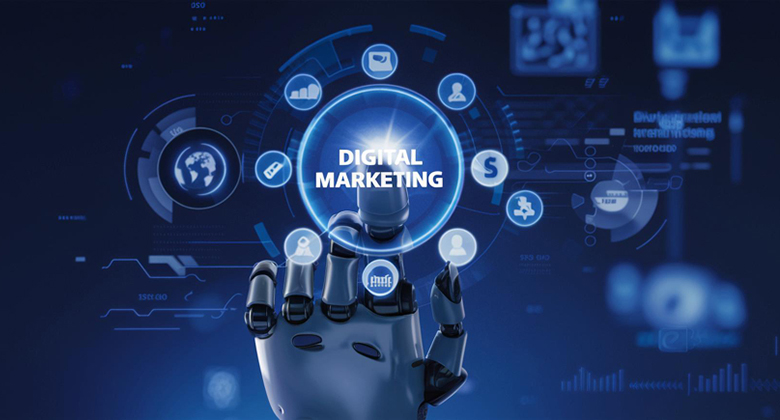
Digital marketing is no longer what it used to be. Over the past decade, businesses relied heavily on traditional strategies like manual campaign management, broad audience targeting, and delayed data analysis. These methods, while effective at the time, were built on assumptions and reactive decision-making. Today, the landscape has shifted dramatically. With the rise of artificial intelligence, marketing has become faster, smarter, and more precise. AI is not just enhancing digital marketing—it is fundamentally replacing traditional approaches and redefining how brands connect with their audiences.
The Shift from Traditional Marketing to AI-Driven Strategies
At its core, the difference between traditional and AI-driven marketing lies in how decisions are made. Traditional marketing depends on human intuition, experience, and historical data. Campaigns are often planned in advance and adjusted slowly based on performance reports. In contrast, AI-driven marketing uses real-time data, machine learning algorithms, and predictive insights to make instant decisions. This shift from reactive to proactive marketing allows businesses to stay ahead of customer needs rather than simply responding to them.
AI is Automating Campaign Management
One of the most significant changes AI brings is automation in campaign management. Previously, marketers spent hours setting up ads, choosing keywords, testing creatives, and adjusting budgets manually. Today, platforms like Google Ads and Meta Platforms use AI to handle these processes automatically. These systems analyze user behavior, optimize ad placements, and adjust bids in real time to maximize performance.
This shift not only reduces manual effort but also significantly improves return on investment. Businesses can now run highly efficient campaigns without constant monitoring, allowing teams to focus more on strategy and creativity rather than repetitive tasks.
Hyper-Personalization is Replacing Mass Marketing
Traditional marketing often relied on a one-size-fits-all approach, delivering the same message to a broad audience. However, modern consumers expect tailored experiences that reflect their preferences and behavior. AI enables hyper-personalization by analyzing vast amounts of user data, including browsing history, purchase behavior, and engagement patterns.
Tools like HubSpot and Salesforce allow marketers to create highly personalized campaigns, from targeted emails to dynamic website content. As a result, customers feel more understood and valued, leading to higher engagement, stronger relationships, and improved conversion rates.
SEO is Evolving into AI Search (GEO)
Search engine optimization is undergoing a major transformation due to AI. Traditional SEO strategies focused on keywords, backlinks, and ranking positions. While these factors still play a role, the rise of AI-powered search tools like ChatGPT and Perplexity AI is changing how users discover information.
Instead of browsing multiple websites, users now expect direct, accurate answers. This has led to the emergence of Generative Engine Optimization (GEO), where content is optimized for AI-generated responses. Businesses must now focus on creating authoritative, structured, and insight-driven content that AI systems can easily understand and present.
AI is Transforming Content Marketing
Content marketing has always been a cornerstone of digital strategy, but AI is reshaping how content is created and distributed. In the past, producing high-quality content required significant time, effort, and resources. Today, AI-powered tools like Jasper AI and Copy.ai can generate blogs, social media posts, ad copy, and more within minutes.
While AI enables speed and scalability, it is important to remember that technology alone cannot replace human creativity. The most successful content strategies combine AI efficiency with human storytelling, ensuring that content is not only optimized but also engaging and meaningful.
Predictive Analytics is Replacing Traditional Data Analysis
Data has always been central to marketing, but the way it is used has changed significantly. Traditional methods focused on analyzing past performance to guide future decisions. AI, however, introduces predictive analytics, allowing marketers to anticipate trends and customer behavior before they happen.
By identifying patterns and forecasting outcomes, AI helps businesses make proactive decisions. Instead of reacting to poor performance, marketers can optimize campaigns in real time and prevent issues before they arise. This shift from reactive to predictive marketing is one of the most powerful advantages of AI.
Chatbots and Conversational Marketing
Customer engagement has evolved rapidly with the introduction of AI-powered chatbots. Traditional support systems, such as email and call centers, often resulted in delays and limited availability. Today, platforms like Intercom and Drift enable businesses to communicate with customers instantly.
These AI-driven systems provide 24/7 support, answer queries in real time, and guide users through the buying journey. By offering immediate assistance, businesses can improve customer satisfaction while also increasing lead generation and conversions.
AI is Powering Performance Marketing
Performance marketing has become more efficient and precise with AI integration. Traditionally, marketers had to manually test different ad variations, analyze results, and optimize campaigns over time. AI simplifies this process by handling multiple variables simultaneously and making real-time adjustments.
It can test hundreds of ad creatives, identify high-performing audiences, and allocate budgets effectively. This ensures that marketing campaigns deliver maximum results with minimal waste, making AI an essential component of modern performance marketing strategies.
Challenges of AI in Digital Marketing
Despite its many advantages, AI is not without challenges. Over-reliance on automation can lead to a lack of originality and brand identity. There are also concerns related to data privacy and ethical usage of customer information. Additionally, AI-generated content can sometimes feel generic if not guided properly.
Businesses must approach AI strategically, using it as a tool to enhance human capabilities rather than replace them entirely. Maintaining a balance between automation and creativity is key to long-term success.
The Future: AI and Human Collaboration
The future of digital marketing is not about AI replacing humans but about collaboration between the two. AI excels at handling data, automation, and optimization, while humans bring creativity, emotional intelligence, and strategic thinking.
Marketers who embrace AI and integrate it effectively into their workflows will have a significant competitive advantage. Those who continue to rely solely on traditional methods may struggle to keep up in an increasingly data-driven world.
AI is not just changing digital marketing—it is redefining it. From automation and personalization to predictive analytics and content creation, AI is replacing traditional strategies at every level. Businesses that adapt to this transformation will be better positioned to meet customer expectations, improve efficiency, and achieve higher returns on investment.
The shift is already happening. The only question is whether your business is ready to evolve with it.